
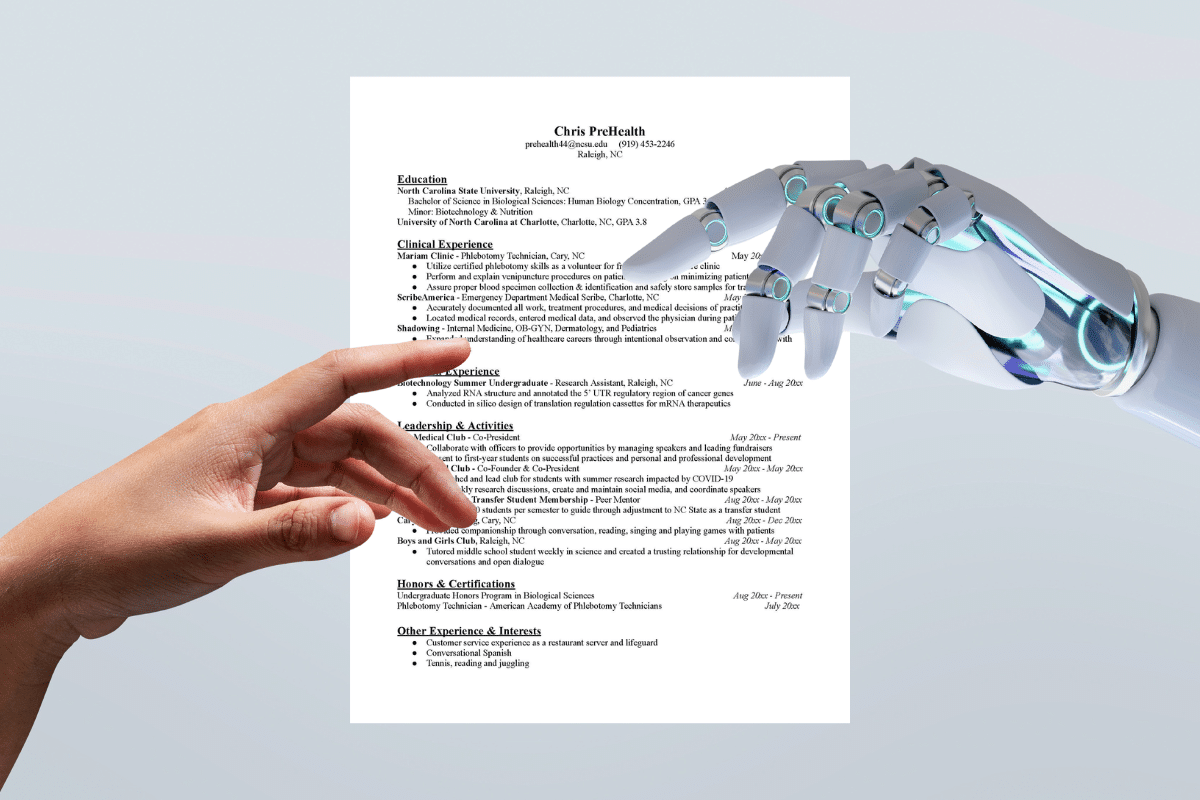
In today’s competitive job market, algorithms in hiring and AI tools shape how employers find talent, but are they always helping?
Are you in the middle of your hiring process, but wondering what’s missing or not hitting the mark? It may not be your company or candidates for the position, but it could be the algorithm. We’re here to answer the question: are algorithms helping or hurting your hiring search?
Entertain us for a moment. Imagine you’re in the market for a new vacuum. You use your favorite search engine to research specific brands and models you might be interested in. You might start to notice multiple ads for the same vacuums. This is because algorithms can track your search histories and provide helpful insights, tying into your research to be a beneficial sidekick.
Let’s apply this concept to hiring. When it comes to finding the perfect applicant, there are traits and expectations needed to fill your open role. The question becomes: how do I streamline a role and find the best fit? With our current technological advances, there are many algorithms that target individuals based on a multitude of items. These can include search histories, click histories, watching or reading time, profile data, and more. Everyone’s algorithm is personalized, so the main goal within a hiring search is to write a highly specific job description so it can attract the appropriate target markets.
Here are a few ways your company can streamline your hiring process and use the algorithm chain to your benefit.
 Why Timing Matters in Your Hiring Algorithm
 Why Timing Matters in Your Hiring Algorithm
It’s no secret that timing is everything. It can be either helpful or hurtful within your search. From the candidate perspective, they are ready to start a new role, shift gears, and use their prior skills and experience. They have likely been endlessly searching on job boards, sending in applications, and editing resumes. While they are searching on LinkedIn or Indeed, they are yearning for an easy application process. Sometimes simple is best. This means providing a seamless way to submit a resume, monitoring how long the post has been active, and having a “to-the-point” description that doesn’t require a lengthy read. If the algorithm notices that people are applying quickly to a role that just went live, it will interpret it as ‘high-interest’. This prioritizes the job, giving it more recognition and optimization when put into search results.
How to Use Technology and Algorithms to Improve Your Hiring Process
When writing a job description, it’s important to note that there are underlying meanings beyond the message. For an algorithm to reach your target market, it needs the following:
- Detailed messaging
- Clear breakdown of responsibilities
- Key words for SEO utilization
- AI flagging
Let’s break it down.
- Key words in a job description aid in making the candidate’s search easier. For example, if someone is searching for an Executive Assistant role, having relevant key words make the description more likely to appear in one’s search. ‘Executive Assistant’, ‘EA’, ‘c-suite’, and ‘calendar management’ are great key words to throw in a job description. The more specific, the better. Placing these key words strategically within the description allows the algorithm to focus more on the executive assistant candidates due to their prior searches, their resume contents, and previous job descriptions they have applied to.
- SEO stands for Search Engine Optimization. What is SEO? SEO is how a person can find things online. Algorithms affect SEO within a job search because of the ranking, specifics of the job posting, and tags. It sounds like a lot, but SEO essentially brings the search results to your screen. The algorithm ranks in order of importance and accuracy. It will present what it thinks will be the best option first, and then so on. Since your resume is online and it is being submitted to various job applications, the algorithm tracks this and provides the best options it thinks would be a beneficial thing to you. Another factor to consider is the use of an Applicant Tracking Systems (ATS). An ATS system is a tool that scans job applicants’ resumes and looks for specific keywords, skills, and certifications. This is a newer development with AI, but if a resume doesn’t match the specific keywords, it may stop the applicant from moving forward. “In 2025, 97.8% of Fortune 500 companies were found to use an Applicant Tracking System (ATS),” according to JobScan.
- Access to AI has never been easier, but it’s also easier than ever to detect. When utilizing AI to help write a job description, make sure the result is clear, concise, and accurate. AI can be beneficial, but it’s up to you to ensure the details are correct and the content accurately fits your role and company culture.
How Recruiting Firms Complement AI and Algorithms in Hiring
So where do you start? Starting a hiring search can be difficult. You’re responsible for countless moving parts. Recruiting firms are there to help ease the stress of the process. Whether it’s determining the expectations of the open role, appropriate pay rate or benefits, recruiters are there from start to finish. They are there to help both clients and candidates succeed.
Working with a recruiting firm allows organizations access to a hidden network of candidates, whether they are passively or actively looking. On the flip side, some companies may not publicly post all of their jobs online. Recruiting firms are there to close the gap. Candidates who may not organically come across your open role are vetted and presented to the hiring team.
Additionally, having a recruiter review each resume adds a personal touch to the experience, especially in the current world of AI we live in. Partnering with a recruiting firm makes a client’s life easier because their time is given directly back to them. While they operate within their organization, it can be an extra task that adds more on to their already existing workload. On the other hand, recruiting firms are there specifically to find the right talent from start to finish.
 Using Your Network and Algorithms Together for Smarter Recruiting
 Using Your Network and Algorithms Together for Smarter Recruiting
Every company, whether in Kansas City or beyond, has team members with their own unique networks. Some are well established, while others are just beginning to grow. Tapping into one’s network is a great resource when hiring for a role. For example, if a person is searching their network on LinkedIn, the algorithm will track how long the profile was viewed, how many people clicked on the profile, and how the researcher interacted with their page. As the algorithm tracks these actions, it can match similar or well-aligning profiles that the researcher should view.
Networking can also be word-of-mouth. The more a person networks with others and shares their name, they expand their brand and make connections. People will be able research the individual and gather information about them. As searches increase, algorithms take notice, linking related profiles, companies, and content along the way.
Conclusion
The technological advances we’ve had the past few years continue to expand the way we hire and seek new applicants.
Looking to expand your team doesn’t have to be stressful. Our recruiters can provide resources, insights, and hiring help to make sure your next search is as seamless as possible.
FAQs
- How can I use AI to improve my hiring process?
- AI can make parts of the hiring process more efficient, but it’s important to use it carefully. While AI tools can scan resumes and identify keywords, they may overlook qualities or experiences that a human reviewer would notice. AI can assist with writing job postings or organizing candidate data, but it shouldn’t replace human judgment. If you do use AI, use it as a supplement, not a substitute. Your instincts and experience are still the most valuable tools in finding the right hire.
- What key elements should I include in my job search?
- A clear detailed job description sets the tone for your hiring process. Include the role, pay range, expectations, required skills and qualifications, and growth opportunities. Use targeted keywords to boost visibility in search results for candidates you are wanting to target. For example, if you’re hiring for an HR position, include terms like “HR manager,” “recruiting,” and “employee relations.” Quick response times also keep candidates engaged and your process moving. If utilizing AI, do so minimally so the job description, resume, and interview process remain personal. After all, a robot isn’t applying for the role, so a robot should not interview the candidate.
- How can I streamline my hiring process to attract the best candidates?
- Researching market trends before posting a role helps attract the stronger candidates. Look at what similar companies are hiring for, how they structure their job descriptions, and what type of applicants they’re drawing in. Clarity is key. Define what the company needs, the role’s responsibilities, and expected outcomes. Include realistic salary ranges and growth potential. When expectations are clear, the hiring process runs smoother and the right candidates are more likely to apply.
- How can a recruiting firm help support my hiring efforts?
- Recruiters are experts in their fields. When a position opens, they hop on board and present the best-fitting candidates for the company. Recruiting firms understand the market, hiring trends, benchmarks, and what candidates and clients expect. Their goal is to ease hiring stress, save time, and help organizations focus on what they do best.
Need help navigating the hiring algorithms? Connect with Chief of Staff KC to simplify your recruiting strategy.

Written by Morgan Kastelan
Recruiting Coordinator at Chief of Staff KC
Currently hiring and need a helping hand? Haven’t had a smooth job search?
Reach out to Chief of Staff KC with any questions you may have, and we’ll pair you with a dedicated recruiter that is motivated to find the right fit for you. Let’s get started.